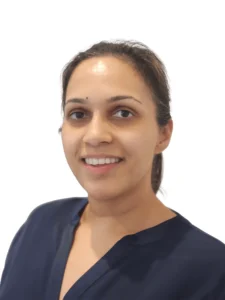
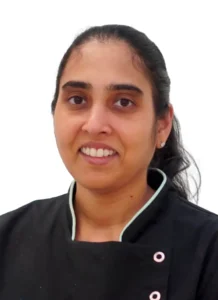
Dentures are removable, custom-made appliances that replace missing teeth and the surrounding gum. Dr Nina Stallman and Dr Nima Kancherla provide full and partial dentures. A new set takes several appointments over a number of weeks. Most people need a few weeks to adjust.
Want to talk it through first? Call and our team can answer your questions.

If you’re missing several or all of your teeth, dentures can restore your ability to eat, speak and smile with comfort and confidence. At Sandgate Family Dental, our experienced team provides custom-made full and partial dentures designed to fit comfortably, look natural and suit your lifestyle. Whether you’ve been wearing dentures for years and need a replacement set, or you’re considering them for the first time, we’ll take the time to explain your options and find an approach that works for you. Our clinic is located at 12 Lagoon St, Sandgate, and we welcome patients from across North Brisbane, including Shorncliffe, Brighton, Deagon, Bracken Ridge and surrounding suburbs.
At Sandgate Family Dental, full and partial dentures are provided by our dentists Dr Nina Stallman and Dr Nima Kancherla, for patients across Sandgate and the north Brisbane bayside. We take the time to fit them well and talk through your options first.
Dentures are removable dental appliances that replace missing teeth and the surrounding gum tissue. They’re custom-made from impressions of your mouth so they fit securely over your gums and restore the appearance and function of your natural teeth.
Modern dentures are crafted from durable, natural-looking materials — including acrylic resin for the base and either acrylic or porcelain for the teeth. When well-made and properly fitted, dentures can closely resemble your natural teeth and support normal facial structure.
Dentures are one of the most established tooth replacement options in restorative dentistry, and they remain a practical, non-surgical choice for patients who have lost multiple teeth.
There are several types of dentures, and the right one for you will depend on how many teeth are missing, the health of your remaining teeth and gums, and your individual needs and preferences.
Full dentures replace all of the teeth in the upper jaw, the lower jaw, or both. They sit over the gums and are held in place by suction, the natural contour of your jaw, or denture adhesive if needed. Full dentures are an option when all natural teeth have been lost or need to be removed.
Partial dentures are used when some natural teeth remain. They fill the gaps left by missing teeth and are held in place by clasps or precision attachments that connect to your remaining teeth. Partial dentures help prevent the remaining teeth from shifting out of position and restore chewing function across the arch. If your remaining teeth need strengthening, your dentist may recommend dental crowns to provide additional support for the partial denture.
Immediate dentures are placed on the same day that teeth are extracted, so you don’t have to go without teeth during the healing period. Because the gums and bone can change shape as they heal, immediate dentures typically need to be adjusted or relined over the following months. In some cases, a new set of dentures may be made once healing is complete.
For patients who want greater stability, implant-retained dentures are an option. These dentures clip onto dental implants that have been placed in the jawbone, providing a more secure fit that reduces movement during eating and speaking. The implant placement is typically carried out by a specialist, with the denture designed and fitted at our Sandgate clinic. Implant-retained dentures can be removable (for cleaning) or fixed, depending on the treatment plan.
Your dentist will assess your situation and discuss which type of denture is most suitable for your needs.
Getting dentures at Sandgate Family Dental involves several appointments over a number of weeks, as each set is custom-made to fit your mouth.
Your dentist will examine your mouth, assess the health of any remaining teeth and gums, and discuss your goals and expectations. If extractions are needed before dentures can be made, these will be planned as part of the overall treatment.
Detailed impressions of your gums and jaw are taken, along with measurements of how your jaws relate to each other when you bite. These records are sent to a dental laboratory where your dentures are crafted.
Before the final dentures are completed, you’ll have the opportunity to try in a wax or trial version. This allows you and your dentist to check the fit, the bite and the appearance — including the shape, size and colour of the teeth — and make adjustments before the final set is produced.
Once your dentures are ready, your dentist will fit them and check for comfort and function. It’s normal for minor adjustments to be needed in the early weeks as your mouth adapts. We encourage patients to return for follow-up appointments so we can fine-tune the fit and address any sore spots or areas of discomfort.
If you’re missing teeth and want to explore your options, our team can help you understand whether dentures, a dental bridge or another solution is right for your situation. Book a consultation online or call our Sandgate clinic on (07) 3269 6252.
It’s completely normal for new dentures to feel unfamiliar at first. Most patients need a period of adjustment as the muscles of the cheeks, tongue and lips adapt to the new appliance.
In the first few weeks, you may notice increased saliva production, some difficulty pronouncing certain words, or mild discomfort as your gums settle. Eating may feel different initially — starting with softer foods cut into small pieces can help, gradually reintroducing firmer foods as you become more confident.
Reading aloud or practising speaking at home can help your tongue and lips adjust to the dentures more quickly. If sore spots or discomfort persist, don’t try to adjust the dentures yourself — return to our clinic and your dentist can make precise modifications to improve the fit.
For most patients, the adjustment period lasts a few weeks, after which the dentures should feel more natural and comfortable.
Proper care helps keep your dentures in good condition and your mouth healthy.
Remove your dentures each night to give your gums a chance to rest and recover. Clean them daily using a soft-bristled brush and a denture-specific cleanser — avoid regular toothpaste, as it can be too abrasive and scratch the surface. Rinse your dentures after eating to remove loose food particles.
When your dentures are out of your mouth, store them in water or a denture soaking solution to prevent them from drying out and losing their shape. Brush your gums, tongue and any remaining natural teeth each day to maintain good oral hygiene and reduce the risk of gum irritation or infection.
Even if you wear full dentures, regular dental check-ups remain important. Your dentist will examine your gums, check the fit of your dentures and look for any changes in your oral tissues. Ill-fitting dentures can cause irritation, sore spots and difficulty eating, so it’s worth having them assessed regularly.
Over time, the shape of your gums and jawbone can change, which may affect how your dentures fit. When this happens, a reline — where the base of the denture is reshaped to match your current gum contours — can often improve the fit without the need for a completely new set.
If your dentures crack, chip or develop a broken clasp, it’s important to have them repaired professionally rather than attempting a fix at home. DIY repairs with household adhesives can damage the denture and irritate your mouth. Bring your dentures to our Sandgate clinic and we’ll assess whether a repair or replacement is needed.
If you’ve noticed that your dentures feel loose, are causing persistent sore spots, or don’t seem to fit as well as they used to, book an appointment for an assessment. A reline or adjustment may be all that’s needed to restore comfort.
Dentures are one of several options for replacing missing teeth. Understanding how they compare to other restorations can help you make an informed choice.
A dental bridge is a fixed restoration that replaces one to three missing teeth in a row, anchored to the natural teeth on either side of the gap. Bridges don’t need to be removed for cleaning and generally feel more stable than removable dentures. However, bridges require the adjacent teeth to be reshaped to support the restoration, and they’re only suitable when the neighbouring teeth are strong enough. A partial denture may be a more practical option when multiple teeth are missing across different areas of the mouth.
Dental implants are surgically placed into the jawbone and act as artificial tooth roots to support a crown, bridge or denture. Implants can provide a more secure and permanent feel than removable dentures, and they help preserve jawbone density over time. However, implants require adequate bone, involve a surgical procedure and have a longer treatment timeline. For some patients, implant-retained dentures offer a middle ground — combining the stability of implants with the convenience of a removable appliance.
Your dentist will discuss the pros and cons of each option based on your individual situation, including the number and position of missing teeth, the health of your remaining teeth and gums, and your personal preferences and budget. For a side-by-side look at all three options, read our guide to dentures, implants and bridges compared.
Dentures are generally covered under the major dental or prosthetic component of health fund extras policies. The amount you receive back will depend on your level of cover, your fund’s fee schedule, and any applicable waiting periods. Some funds may also cover denture relines and repairs under your extras policy.
At Sandgate Family Dental, we process health fund claims on the spot using HICAPS, so you only need to pay the gap (if any) at the time of your visit. We are preferred providers or members of provider networks for several major funds, including HCF, nib, CBHS and HIF. Patients with these funds may receive higher rebates on their treatment. Visit our health funds page for more details.
No health insurance? We also welcome patients who are members of smile.com.au, which offers reduced fees on a range of treatments. Our team is always happy to provide a full cost estimate before treatment begins, so you know what to expect. If you’re new to our practice, check out our new patient offer.
Sandgate Family Dental is located at 12 Lagoon St, Sandgate, with convenient access for patients throughout the North Brisbane bayside area. We’re open six days a week, including Saturday mornings, making it easy to fit appointments around your schedule.
We regularly care for patients from Sandgate, Shorncliffe, Brighton, Deagon, Boondall, Bracken Ridge, Taigum, Fitzgibbon, Clontarf, Woody Point, Margate and surrounding areas.
Whether you need new dentures, a reline or repair, or want to discuss your tooth replacement options — our team is here to help.
Book your consultation online or call us on (07) 3269 6252.
How long does it take to get dentures? The denture process typically takes several weeks and involves multiple appointments — including an initial consultation, impressions, a try-in and the final fitting. Immediate dentures can be provided on the same day as extractions if planned in advance, though they may need adjustments as your gums heal.
How long do dentures last? With proper care, a well-made set of dentures can last around five to ten years. Over time, normal wear and changes in the shape of your gums and jaw may mean your dentures need relining or replacing. Your dentist will monitor the fit at your regular check-ups and let you know when attention is needed.
Can I eat normally with dentures? Most patients adjust to eating with dentures within a few weeks. It helps to start with softer foods and gradually reintroduce firmer items as you become more confident. Some foods — such as very sticky or very hard items — may remain more challenging. Over time, most people find they can eat a wide variety of foods comfortably.
Do I still need dental check-ups if I have full dentures? Yes. Even with full dentures, regular dental check-ups are important. Your dentist will examine your gums, check the fit of your dentures, and screen your oral tissues for any changes. Ill-fitting dentures can cause sore spots, irritation and difficulty eating, so regular monitoring helps maintain comfort and oral health.
What’s the difference between dentures and implants? Dentures are removable appliances that sit on the gums, while dental implants are surgically placed into the jawbone to provide a fixed or semi-fixed tooth replacement. Implants tend to feel more stable and can help preserve jawbone density, but they involve surgery and a longer treatment process. Implant-retained dentures offer a middle ground — combining implant stability with a removable appliance. Your dentist can help you weigh up the options.
Can loose dentures be fixed? In many cases, yes. If your dentures have become loose, a reline — where the base is reshaped to fit your current gum contours — can often improve the fit significantly. If the denture is damaged or very worn, a new set may be recommended. Book an appointment for an assessment and we’ll advise on the most appropriate course of action.

It’s normal for new dentures to feel unfamiliar at first. If sore spots don’t settle, don’t adjust the dentures yourself. Come back and your dentist can adjust the fit. If you’re anxious about treatment, happy gas (inhalation sedation) is offered by both our dentists. It’s charged separately (ADA item 943), and it isn’t suitable for everyone, so your dentist checks your medical history first.
Sandgate Family Dental, 12 Lagoon St, Sandgate QLD 4017 · (07) 3269 6252
Mon–Thurs 8:30AM–5:00PM · Fri 8:30AM–4:00PM · Sat 8:00AM–12:00PM
Book a consultation (opens in a new tab)
Or call (07) 3269 6252