Want to talk it through first? Call and our team can answer your questions.

If you’d like straighter teeth without the appearance of traditional metal braces, clear aligners offer a discreet, removable alternative. At Sandgate Family Dental, our experienced team provides clear aligner treatment for adults and teens looking to improve mild to moderate alignment concerns. The aligners are virtually invisible when worn, removable for eating and cleaning, and designed to move your teeth gradually into a more aligned position over a series of months. Our clinic is located at 12 Lagoon St, Sandgate, and we welcome patients from across North Brisbane, including Shorncliffe, Brighton, Deagon, Bracken Ridge and surrounding suburbs.
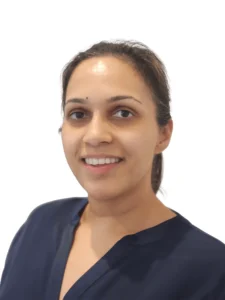
At Sandgate Family Dental, clear aligner treatment is provided by our principal dentist Dr Nina Stallman, for patients across Sandgate and north Brisbane who would like to straighten crowding, gaps or a crossbite discreetly. She will assess whether aligners suit your case and talk through your options with you.
Clear aligners are a series of custom-made, transparent plastic trays that fit snugly over your teeth. Each set of aligners is slightly different, applying gentle, controlled pressure to move your teeth incrementally toward the desired position. You wear each set for a specified period (typically one to two weeks) before progressing to the next set in the series.
Because the aligners are made from smooth, transparent material, they’re far less noticeable than traditional braces. They can also be removed for eating, drinking, brushing and flossing — which makes maintaining your oral hygiene straightforward during treatment.
Clear aligner treatment falls under cosmetic dentistry, though the benefits are often both aesthetic and functional. Straighter teeth can be easier to clean, which may contribute to better long-term oral health.
Clear aligners can be effective for a range of mild to moderate alignment and bite concerns. Common issues that may be treated with clear aligners include mild to moderate crowding (where teeth overlap or are rotated), spacing (gaps between teeth), some cases of overbite, underbite or crossbite, and teeth that have shifted over time (including after previous orthodontic treatment).
Clear aligners may not be suitable for more complex orthodontic cases, such as severe crowding, significant bite discrepancies, or situations involving teeth that need to be rotated substantially or moved vertically. In these cases, your dentist may discuss alternative approaches or refer you to a specialist orthodontist.
The suitability of clear aligners depends on your individual situation. Your dentist will assess your teeth and bite at a consultation and let you know whether aligners are a suitable option for you.
Clear aligner treatment at Sandgate Family Dental follows a structured process from initial consultation through to retention.
Your dentist will examine your teeth, take X-rays, and discuss your goals and concerns. If clear aligners are suitable for your case, digital scans or impressions of your teeth are taken to create a 3D model of your mouth. This is used to map out the planned tooth movements and design your custom aligner series.
Using the digital model, your dentist will show you a projected treatment plan — including the expected movement of your teeth at each stage and an estimated treatment timeline. This gives you a clear picture of the anticipated outcome before you commit to treatment. You’ll have the opportunity to ask questions and discuss any aspects of the plan.
Once your aligners are ready, you’ll receive your first sets and instructions on how to wear and care for them. Aligners should generally be worn for 20 to 22 hours per day, removing them only for eating, drinking anything other than water, and brushing your teeth. You’ll switch to a new set of aligners every one to two weeks, as directed by your dentist.
Small tooth-coloured attachments (small dots of composite resin) may be bonded to certain teeth to help the aligners grip and move those teeth more effectively. These are temporary and are removed at the end of treatment.
You’ll visit our Sandgate clinic for periodic check-ups (typically every six to eight weeks) so your dentist can monitor progress, provide your next sets of aligners, and make any adjustments to the treatment plan if needed.
Once your teeth have reached their final position, you’ll need to wear a retainer to maintain the result. Without retention, teeth can gradually shift back toward their original position. Your dentist will discuss retainer options with you — this may include a removable retainer worn at night or a fixed retainer bonded behind the teeth.
Wondering whether clear aligners could work for you? Our team can assess your teeth and explain your options. Book a consultation online or call our Sandgate clinic on (07) 3269 6252.

Clear aligners have become a popular choice for patients who want to improve the alignment of their teeth with minimal impact on their daily life. Some of the key advantages include their discreet appearance (the transparent trays are difficult to notice when worn, making them a popular choice for working professionals and adults who prefer a less visible treatment), removability (you can take them out to eat, drink, brush and floss — meaning there are no dietary restrictions and oral hygiene is easier to maintain compared to fixed braces), comfort (the smooth plastic trays don’t have the wires and brackets that can cause irritation to the cheeks and lips), and fewer appointments (clear aligner check-ups are generally less frequent than adjustments for traditional braces).
It’s worth noting that clear aligners require discipline — the trays need to be worn for the recommended hours each day to achieve the planned result. Treatment outcomes depend on patient compliance as well as the complexity of the case.
Depending on your goals, clear aligners may be one of several options worth considering. Your dentist can help you understand which approach is most appropriate for your situation.
If your concern is primarily about the colour of your teeth rather than their alignment, teeth whitening may be a simpler solution. For minor chips, gaps or shape concerns on individual teeth, dental bonding can often address these in a single appointment. Porcelain veneers can change the appearance of teeth in terms of colour, shape and minor alignment — but they involve removing a thin layer of enamel and are better suited to cosmetic concerns rather than functional alignment issues.
Clear aligners are specifically designed to move teeth into a more aligned position, so they address the underlying positioning rather than masking the appearance. For patients who want both alignment correction and cosmetic enhancement, a staged approach — aligners first, followed by whitening or bonding — can sometimes achieve a comprehensive result.
The length of clear aligner treatment varies depending on the complexity of your case and how consistently you wear your aligners. For mild cases, treatment may take as little as three to six months. Moderate cases typically take six to twelve months, and more involved cases may require twelve to eighteen months or longer.
During treatment, you may notice some mild tightness or pressure when you switch to a new set of aligners — this is normal and usually subsides within a day or two. Some patients find that their speech is slightly affected for the first few days of wearing aligners, but this typically improves quickly as the tongue adjusts.
Your dentist will provide an estimated treatment timeline at your consultation, but it’s important to understand that the actual duration depends on how consistently the aligners are worn and how your teeth respond to treatment.
Looking after your aligners helps keep them clean, clear and effective throughout your treatment.
Rinse your aligners each time you remove them to wash away saliva and bacteria. Clean them daily using a soft toothbrush and lukewarm water — avoid hot water, as it can warp the plastic. Dedicated aligner cleaning solutions are also available. Don’t use regular toothpaste, as some formulas can be abrasive and scratch the surface, which can make the aligners appear cloudy.
Always remove your aligners before eating or drinking anything other than water. Store them in the protective case provided when they’re not in your mouth — this prevents them from being lost, damaged or accidentally thrown away.
Continue your regular oral hygiene routine during treatment. Brush and floss after meals before putting your aligners back in. Maintaining good oral health throughout treatment helps ensure your teeth and gums stay healthy while they’re being moved. Regular check-ups and cleans remain important during aligner treatment.
Clear aligner treatment is classified as orthodontic treatment by most health funds. Coverage varies significantly depending on your fund and level of extras cover. Some policies include an orthodontic benefit, while others don’t cover orthodontic treatment at all. Waiting periods and annual limits may also apply. We recommend checking with your fund before beginning treatment so you have a clear picture of what’s covered.
At Sandgate Family Dental, we process health fund claims using HICAPS where applicable. We are preferred providers or members of provider networks for several major funds, including HCF, nib, CBHS and HIF. Visit our health funds page for more details on the funds we work with. You can also read about orthodontic cover and how it applies to aligner treatment.
Our team is happy to provide a full cost estimate and discuss payment arrangements before treatment begins, so you know exactly what to expect. If you’re new to our practice, check out our new patient offer.
Sandgate Family Dental is located at 12 Lagoon St, Sandgate, with convenient access for patients throughout the North Brisbane bayside area. We’re open six days a week, including Saturday mornings, making it easy to fit consultations and progress check-ups around your schedule.
We regularly care for patients from Sandgate, Shorncliffe, Brighton, Deagon, Boondall, Bracken Ridge, Taigum, Fitzgibbon, Clontarf, Woody Point, Margate and surrounding areas.
Whether you’re curious about clear aligners, want to know if you’re a suitable candidate, or are ready to start treatment — our team is here to help.
Book your consultation online or call us on (07) 3269 6252.
How long does clear aligner treatment take? Treatment duration varies depending on the complexity of your case and how consistently you wear your aligners. Mild cases may take as little as three to six months, while moderate cases typically take six to twelve months. Your dentist will provide an estimated timeline at your consultation.
Do clear aligners hurt? You may feel some mild tightness or pressure when you switch to a new set of aligners — this is a sign the aligners are working. The sensation usually subsides within a day or two. Most patients find clear aligners more comfortable than traditional braces, as there are no wires or brackets to cause irritation.
Can I eat and drink with my aligners in? You should remove your aligners before eating or drinking anything other than water. This prevents staining, damage to the trays, and food getting trapped between the aligners and your teeth. Brush your teeth after meals before reinserting the aligners.
How many hours a day do I need to wear my aligners? For the treatment to progress as planned, aligners generally need to be worn for 20 to 22 hours per day. They should only be removed for eating, drinking anything other than water, and brushing your teeth. Wearing them less than recommended can slow your progress and extend your treatment time.
Are clear aligners suitable for everyone? Clear aligners work well for mild to moderate alignment and bite concerns. They may not be suitable for more complex orthodontic issues. Your dentist will assess your teeth, bite and overall oral health at a consultation and let you know whether clear aligners are a suitable option — or whether an alternative approach may be more appropriate.
Will I need to wear a retainer after treatment? Yes. Once your teeth have been moved into their desired position, a retainer is needed to maintain the result. Without retention, teeth can gradually shift back over time. Your dentist will discuss retainer options with you, which may include a removable nighttime retainer or a fixed retainer bonded behind the teeth.

Book a consultation (opens in a new tab)
Or call (07) 3269 6252