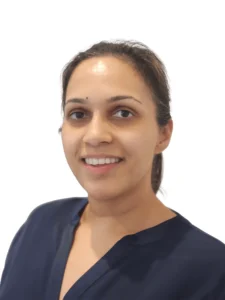
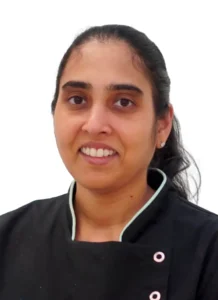
At Sandgate Family Dental, restorative dentistry is provided by our dentists Dr Nina Stallman and Dr Nima Kancherla, for patients across Sandgate and the north Brisbane bayside.
Repairing damaged teeth and replacing missing teeth — so you can chew comfortably, speak clearly and feel confident about your oral health.

At Sandgate Family Dental, our restorative dentistry services are designed to help patients whose teeth have been affected by decay, damage, wear or loss. Whether you have a single cracked tooth that needs protecting or several missing teeth that are affecting the way you eat and speak, our team can talk you through the options and help you find a path forward.
We understand that needing dental repair work can feel overwhelming — especially if you’ve been putting it off, or if you’re not sure what to expect. Our approach is straightforward and unhurried. We’ll explain what’s happening, what your options are, and what each treatment involves, so you can make decisions you feel comfortable with. There’s no pressure, and no judgement about how your teeth got to where they are.
We’re located at 12 Lagoon St, Sandgate QLD 4017, and welcome patients from across Sandgate, Brighton, Deagon, Shorncliffe, Taigum, Boondall, Bracken Ridge, Fitzgibbon and surrounding suburbs.
Book an appointment online or call us on (07) 3269 6252.
Restorative dentistry is the area of dental care focused on repairing teeth that are damaged, decayed or weakened, and replacing teeth that are missing. The aim is to return your teeth to proper function and form — helping you chew, speak and maintain your oral health as comfortably as possible.
Unlike cosmetic dentistry, which primarily addresses the appearance of teeth, restorative dentistry focuses on structural and functional outcomes. That said, modern restorative materials and techniques often produce results that look natural as well.
Restorative treatment may be recommended when you have a tooth that is cracked, broken or chipped, a tooth weakened by large fillings or decay, one or more missing teeth, a tooth that has undergone root canal treatment and needs protection, teeth that are worn down from grinding (bruxism), or old dental work that has deteriorated and needs replacing.
Your dentist will assess your situation, explain what they find, and discuss which treatment options are suitable for your specific needs.
When a tooth is damaged but still has a healthy root and enough remaining structure, it can often be repaired rather than extracted. The type of repair depends on the extent and location of the damage.
Minor damage — fillings and bonding. Small areas of decay, minor chips or surface cracks can often be treated with a dental filling. At Sandgate Family Dental, we use tooth-coloured composite resin that is matched to the shade of your natural teeth, so the repair blends in. For small chips on front teeth, dental bonding may also be an option.
Moderate damage — dental crowns. When a tooth is too damaged for a filling to provide reliable, long-term support — for example, if a large portion of the tooth has broken off, or the tooth has been weakened by repeated fillings — a dental crown may be a more appropriate solution. A crown is a custom-made cap that fits over the entire visible portion of the tooth, restoring its shape, strength and function.
Internal damage — root canal treatment. If decay or trauma has reached the inner pulp of a tooth (the nerve and blood supply), the tooth may become infected or inflamed. Root canal treatment involves removing the damaged pulp, cleaning and sealing the inside of the tooth, and then placing a crown over it to protect it. Despite its reputation, root canal treatment is a routine procedure carried out under local anaesthetic.
A missing tooth isn’t just a cosmetic concern. Over time, the gap can affect the way you chew, cause neighbouring teeth to shift, and may contribute to bone loss in the jaw. Replacing a missing tooth helps maintain proper bite alignment and supports the health of surrounding teeth.
At Sandgate Family Dental, we offer several options for replacing missing teeth. The right choice depends on factors including how many teeth are missing, where they are in the mouth, the health of surrounding teeth and bone, and your personal preferences and budget.
Your dentist will explain the advantages and limitations of each option so you can make an informed decision.
A dental crown is one of the most common restorative treatments. It is essentially a custom-made cap — shaped and coloured to match your natural teeth — that is placed over a damaged tooth to restore its strength, shape and appearance.
Crowns are often recommended after root canal treatment, when a tooth has a large filling that is no longer providing adequate support, when a tooth has been cracked or significantly broken down, or as part of a dental bridge or implant restoration.
The process typically involves two appointments. At the first visit, your dentist prepares the tooth and takes impressions or digital scans, which are sent to a dental laboratory where the crown is custom-made. A temporary crown is placed in the meantime. At the second visit, the permanent crown is fitted, adjusted and cemented into place.
A dental bridge is a fixed restoration used to replace one or more missing teeth. It works by anchoring an artificial tooth (or teeth) to the natural teeth on either side of the gap, which are fitted with crowns to support the bridge.
Bridges can be a suitable option when the teeth on either side of the gap are healthy enough to support the restoration and when implants are not preferred or not suitable. Like crowns, bridges are custom-made in a dental laboratory and typically require two appointments to complete.
A well-maintained dental bridge can last many years, though it does require careful cleaning around and underneath the artificial tooth to maintain gum health.
A dental implant is a titanium post that is surgically placed into the jawbone to replace the root of a missing tooth. Once the implant has integrated with the bone (a process that typically takes several months), a custom-made crown is attached to the top, creating a replacement tooth that looks, feels and functions similarly to a natural tooth.
Implants can be used to replace a single missing tooth, support a bridge to replace multiple teeth, or anchor a full set of dentures for improved stability.
Because implant treatment involves a surgical component and a longer overall treatment timeline, it’s not suitable for every patient. Your dentist will assess your bone density, gum health and overall medical history to determine whether implants are a viable option for you.
Not sure whether an implant or a denture suits you? Compare dental implants vs dentures.
Dentures are removable appliances designed to replace multiple missing teeth. They can be an appropriate option for patients who have lost several teeth or a full arch and are looking for a non-surgical solution.
Partial dentures replace one or more missing teeth and are held in place by clasps that attach to remaining natural teeth. They can help restore chewing function, support facial structure and prevent remaining teeth from shifting.
Full dentures replace an entire arch of teeth (upper, lower or both) and rest on the gums. Modern dentures are custom-made to fit comfortably and look natural, though they do require an adjustment period and regular maintenance.
For patients who find that conventional dentures feel loose or uncomfortable, implant-supported dentures may offer improved stability. Your dentist can discuss whether this option is suitable for your situation.
It’s not always obvious that a tooth needs restorative treatment. Some issues develop gradually and may not cause pain until they’ve progressed significantly. Here are some common signs that suggest you should have your teeth assessed:
A toothache or persistent sensitivity, a visible crack, chip or break in a tooth, a tooth that feels loose or weakened, pain when biting down or chewing, a filling or crown that has fallen out or feels loose, a gap from a missing tooth that is affecting your bite or eating, swelling, tenderness or signs of infection around a tooth, or teeth that have become visibly worn or shortened over time.
If you’re experiencing any of these, it’s worth booking an appointment so your dentist can assess the situation and discuss your options. Early treatment is generally simpler and more conservative than waiting until a problem worsens.
If you’re in pain or dealing with an urgent issue, our emergency dental appointments are available for patients who need to be seen quickly.
If you’ve been referred for restorative treatment, or you’ve booked an appointment to discuss a damaged or missing tooth, here’s what you can expect.
Assessment. Your dentist will examine the affected tooth or area, ask about your symptoms and history, and may take X-rays to get a complete picture. They’ll explain what they find in plain language — no jargon.
Treatment options. Your dentist will walk you through the options available for your specific situation, including what each treatment involves, how many appointments it’s likely to require, the expected timeline, and an estimate of costs. If you have private health insurance, we can check your coverage before you decide.
Your decision. You won’t be pressured into any treatment. Our role is to give you the information you need to make a decision that’s right for you — whether that’s proceeding straight away, taking some time to think about it, or starting with a simpler option and reassessing later.
The treatment itself. Most restorative procedures are carried out under local anaesthetic so you won’t feel pain during the treatment. Your dentist will let you know what to expect before, during and after, and will provide aftercare instructions to support your recovery.
Restorative dental work is designed to be durable, but looking after your treated teeth properly helps them last as long as possible.
After restorative treatment, regular dental check-ups and cleans are important. These allow your dentist to monitor the condition of your restorations and catch any issues early. Good daily oral hygiene — brushing twice a day, flossing, and cleaning around crowns, bridges or dentures as advised — plays a significant role in the longevity of any dental work.
If you grind your teeth at night, your dentist may recommend a custom nightguard to protect both your natural teeth and any restorations from excessive wear. Similarly, patients involved in contact sports should consider a custom sports mouthguard for protection.
Your dentist will provide specific aftercare guidance based on the type of treatment you’ve had.
We aim to make restorative dental care as accessible and transparent as possible.
Sandgate Family Dental is a preferred provider with several major health funds, including CBHS, HCF, nib, HIF. We are also an approved provider for Smile.com.au. We offer on-the-spot HICAPS claiming so you only pay the gap at the time of your visit.
Restorative treatments such as crowns, bridges and implants are often partially covered under major dental or extras cover, depending on your policy and waiting periods. Our team can help you understand what your fund covers before you commit to treatment.
If you don’t have private health insurance, we’ll provide a clear cost estimate upfront and can discuss options to help you manage the investment.
Visit our health funds page for more details.
Our restorative dental care is provided by Dr Nima Kancherla and Dr Nina Stallman, both of whom are experienced in a wide range of restorative treatments. They take a thorough, patient-centred approach — listening to your concerns, explaining your options clearly, and supporting you through every step of treatment.

Our practice is located at 12 Lagoon St, Sandgate QLD 4017, with easy access for patients across Brisbane’s northern bayside. We regularly welcome patients from Brighton, Deagon, Shorncliffe, Taigum, Boondall, Bracken Ridge, Fitzgibbon, Bald Hills and surrounding suburbs.
If you’re dealing with a damaged or missing tooth and looking for a restorative dentist close to home, we’d be glad to help.
What is the difference between a crown and a filling?
A filling is used to repair a small to moderate area of decay or damage within a tooth. A crown covers the entire visible portion of the tooth, providing more structural support. Your dentist will recommend whichever option is most appropriate based on the extent of the damage.
Can a broken tooth be saved?
In many cases, yes. Depending on the severity and location of the break, a broken tooth can often be repaired with a filling, bonding, crown or root canal treatment. If the break extends below the gum line or the tooth is severely fractured, extraction may be necessary. The sooner you see a dentist after a break, the more options are typically available.
What is the best option for replacing a missing tooth?
There’s no single answer — it depends on where the tooth is, how many teeth are missing, the health of surrounding teeth and bone, and your personal preferences. Dental implants, bridges and dentures are all effective options in the right circumstances. Your dentist will explain the pros and cons of each during your consultation.
How long do dental crowns last?
The lifespan of a dental crown depends on the material used, the location in the mouth, and how well it’s maintained. With good oral hygiene and regular check-ups, many crowns last 10–15 years or longer. Your dentist will advise on care to help maximise longevity.
Does restorative dental treatment hurt?
Most restorative procedures are carried out under local anaesthetic, so you should not feel pain during treatment. Some patients experience mild soreness or sensitivity afterwards, which typically settles within a few days. Your dentist will explain what to expect and provide aftercare advice.
How much does restorative dentistry cost?
Costs vary depending on the type and complexity of treatment. Your dentist will provide a clear estimate before any work begins. If you have private health insurance with major dental cover, a portion of the cost may be claimable. We offer HICAPS on-site so you can claim your rebate on the spot.
If you have a damaged or missing tooth you’d like assessed, or you’d like to discuss your restorative treatment options, we’re here to help.
Call us on (07) 3269 6252 or book an appointment online.
Sandgate Family Dental is open Monday to Thursday 8:30am–5:00pm, Friday 8:30am–4:00pm, and Saturday 8:00am–12:00pm.
Restorative dentistry at Sandgate Family Dental is available to patients from across the wider North Brisbane bayside, including Bracken Ridge, Boondall, Taigum, Margate, Clontarf and the Redcliffe peninsula. See our North Brisbane dentist page for our full service area.
Restorative dentistry — including dental implants, crowns, bridges and dentures — is one of the more frequently requested services from patients across the North Brisbane bayside. The suburb pages below cover travel, access and local context for the suburbs we see most regularly:
Patients also travel to us from Brighton, Shorncliffe, Deagon, Fitzgibbon and Woody Point — see the North Brisbane dentist page for the full service area.